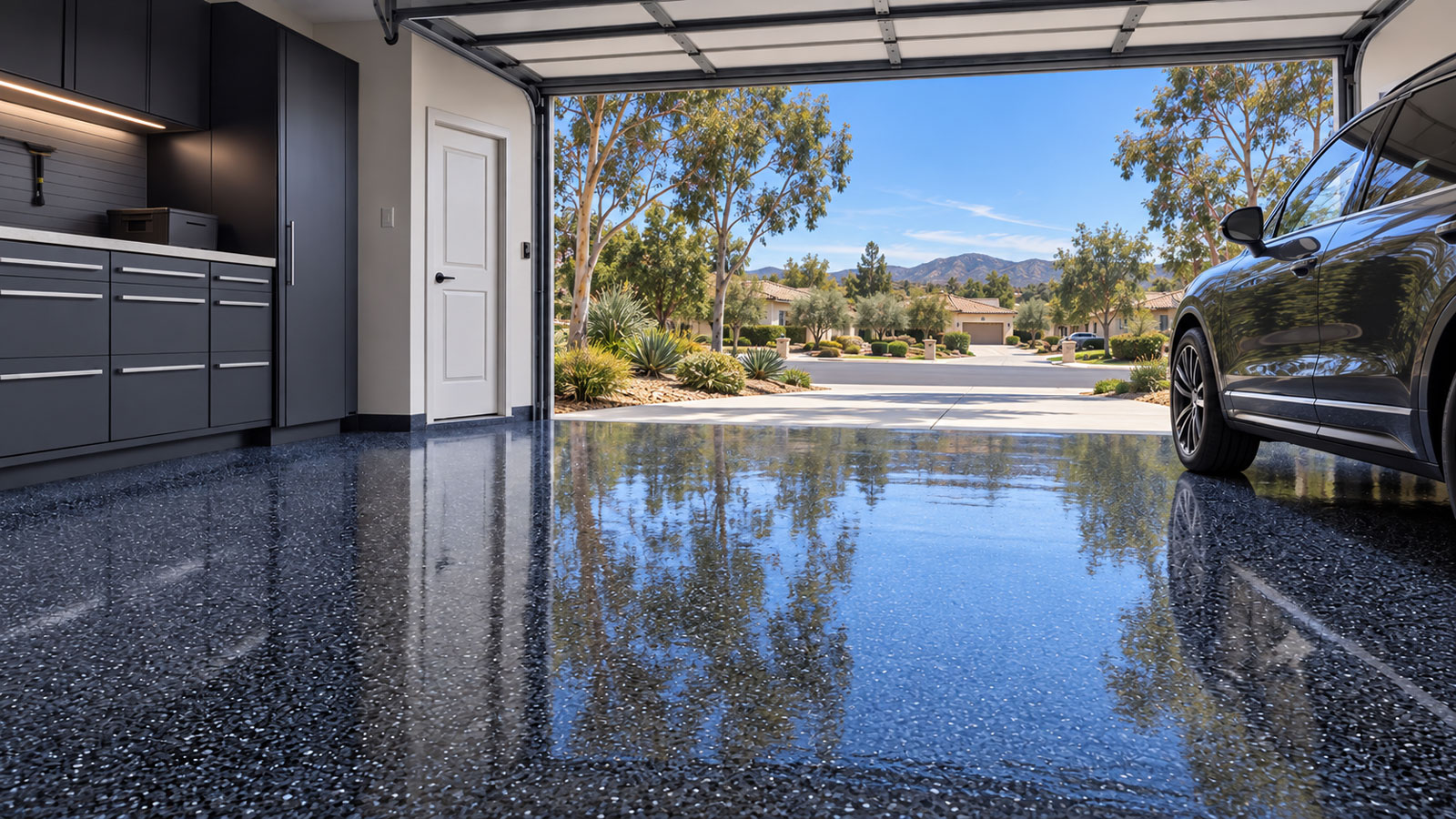
Garage Floor Coating in Huntington Beach, CA
Floor Coating Services in Huntington Beach, CA
Huntington Beach has a much more mature suburban housing base than its beach-city image might suggest. About two-thirds of the city’s homes were built during the 1960s and 1970s, so many garage floors have already seen decades of vehicles, repairs, paint, sealers, patch compounds, or earlier coating projects.
At the same time, Huntington Beach is far larger than a strip of oceanfront homes. Coastal neighborhoods may see more sand, damp gear, bicycles, boards, and coastal exposure, while inland garages often function more like established suburban garages elsewhere in Orange County.
A good coating plan needs both pieces of the picture. The slab history determines what must be removed or repaired, while the way the garage is actually used determines practical choices about texture, cleaning, sun exposure, and topcoat. Huntington Beach has its own municipal floodplain administration and coastal setting, but the condition of a particular garage cannot be inferred from a coastal address. Outdoor salt air, tracked sand and rainwater are context for maintenance and finish discussion only when they affect the actual floor.
Local Market Insight
Huntington Beach combines a predominantly 1960s–1970s housing base with both coastal and inland neighborhoods. Mature slab preparation matters citywide, while sand, wet gear, and coastal exposure should be treated as property-specific rather than automatic.
What Affects the Cost of Garage Floor Coating in Huntington Beach?
Huntington Beach garages may have older coatings, tracked coastal grit or household storage requirements, but not every property experiences the same conditions. The meaningful pricing questions are how much existing material must be removed, whether joints or cracks need repair, what texture is desirable for wet shoes and how the system will perform at sunlit openings. Old coating removal, crack and patch repair, garage size, storage, and the actual traction and finish needs of the space can all affect the final price.
Mature 1960s–1970s slab history
About two-thirds of Huntington Beach homes were built in those two decades. Old paint, patches, sealers, oil staining, and previous coatings are all realistic preparation variables.
Old coating removal
A failed DIY floor, peeling paint, or an unknown coating layer can require substantial grinding before the new system is installed.
Crack and patch repair
Age does not make the slab unsuitable, but cracks, chipped areas, old patch compounds, and repaired areas should be checked individually.
Sand, damp gear, and cleanability
Garages that really do support beach use benefit from a surface that is easy to sweep and wash. Texture should improve traction without making fine sand unnecessarily difficult to clean.
Coastal versus inland exposure
Sun, wind, coastal air, and tracked-in sand vary across a large city. Finish choices should follow the actual property rather than a blanket beach assumption.
Staging and storage
Bikes, boards, tools, cabinets, refrigerators, or household storage can reduce working room and affect preparation access. Those conditions should be confirmed in the garage.
Call for a clear, project-specific estimate — or request one online.
A Large Share of Huntington Beach Garages Date to the 1960s and 1970s
About two-thirds of Huntington Beach homes were built in the 1960s and 1970s. That gives many garage slabs several decades of use and homeowner improvements.
Old paint, crack filler, patch compounds, oil staining, or previous coating kits can matter more to preparation than the final flake color. None of those conditions automatically makes the concrete a poor coating surface.
The useful approach is simply to inspect the history, remove weak material, repair what needs repair, and build the new system on properly prepared concrete.
Housing age is the first useful clue. A garage in a 1960s or 1970s home may have been painted, sealed, patched, or recoated several times. Grinding reveals whether the new system will bond to prepared concrete or to an older weak layer.
Daily use is the second clue. A coastal garage that regularly receives sand, wet shoes, bicycles, or beach gear has different cleaning and traction needs from an inland garage used mostly for vehicles and storage.
An older garage may have repeated layers of DIY floor paint; a recently finished slab may contain sealer. In either case, ask the contractor to inspect compatibility, grind or remove unsuitable material, address cracks and explain how much texture is useful when wet shoes or beach sand enter.
A homeowner who returns from the beach may track fine sand into the garage, but ordinary tracked grit does not prove that all Huntington Beach floors have chemical damage. The practical maintenance choice is a finish that can be swept or rinsed and a texture suited to wet shoes, with continuing cleanup still required.
Beach Garage or Inland Garage? The Use Matters More Than the Label
Some Huntington Beach garages truly deal with sand, damp gear, boards, and stronger coastal exposure. Others sit farther inland and function like conventional suburban garages.
That difference can change the preferred texture, cleaning routine, and importance of direct sun near the door. It does not automatically require a completely different coating system.
Before choosing a finish, the homeowner and installer should talk about how the garage is actually used and how much coastal exposure it really receives.
The best finish balances both. Slab preparation should be based on the floor’s history, while texture and topcoat should be based on how much sun, moisture, sand, and foot traffic the garage actually receives.
Huntington Beach's coastal position and Orange County's official coastal floodplain mapping are reasons to examine any documented water history, not reasons to prescribe moisture mitigation universally. For a floor with older paint or repeated DIY epoxy, confirm compatibility and the required grinding before putting another decorative finish over the surface.
Questions to Answer Before Coating a Huntington Beach Garage
- Was the floor ever painted, sealed, patched, or previously coated?
- Is the home part of the city’s large 1960s–1970s housing base, or was the garage/slab replaced later?
- Is beach sand or wet gear actually a regular use condition?
- How much direct sun reaches the floor with the door open?
- What texture will provide enough traction without making sand harder to clean?
- What storage, bikes, boards, or cabinets must be moved before grinding?
Huntington Beach Garage Floor Coating FAQs
Why does housing age matter so much in Huntington Beach?
Because a large share of the city’s homes were built in the 1960s and 1970s. That makes previous paint, repairs, sealers, and coating history worth checking before the new system is chosen.
Does every Huntington Beach garage need a beach-specific finish?
No. The city includes both coastal and inland settings, and homeowner use varies. Traction, cleaning, and sun-exposure decisions should follow the actual garage.
Will sand ruin a coated floor?
Normal tracked sand is mainly a cleaning and abrasion issue. A durable system and appropriate texture can make maintenance easier, but routine sweeping or washing still matters.
Should an old DIY coating be ground off?
If it is weak, peeling, incompatible, or uncertain, yes. The new system should rely on properly prepared concrete, not an unknown older coating.
How should Huntington Beach homeowners handle tracked sand on coated floors?
Regular sweeping remains important. A well-prepared coating can be easier to clean than porous bare concrete, but texture, oil treatment, previous sealers and sun exposure should be chosen for the individual garage.
Huntington Beach Neighborhoods & Local Context
Phone Quote Line
Speak with a floor coating specialist about your project and get a realistic estimate range.
(657) 500-0330Typical Project Cost
$3,000–$5,500
Typical range for a two-car garage. Final pricing depends on floor size, concrete condition, prep work, coating type, and finish options.
Helpful Guides