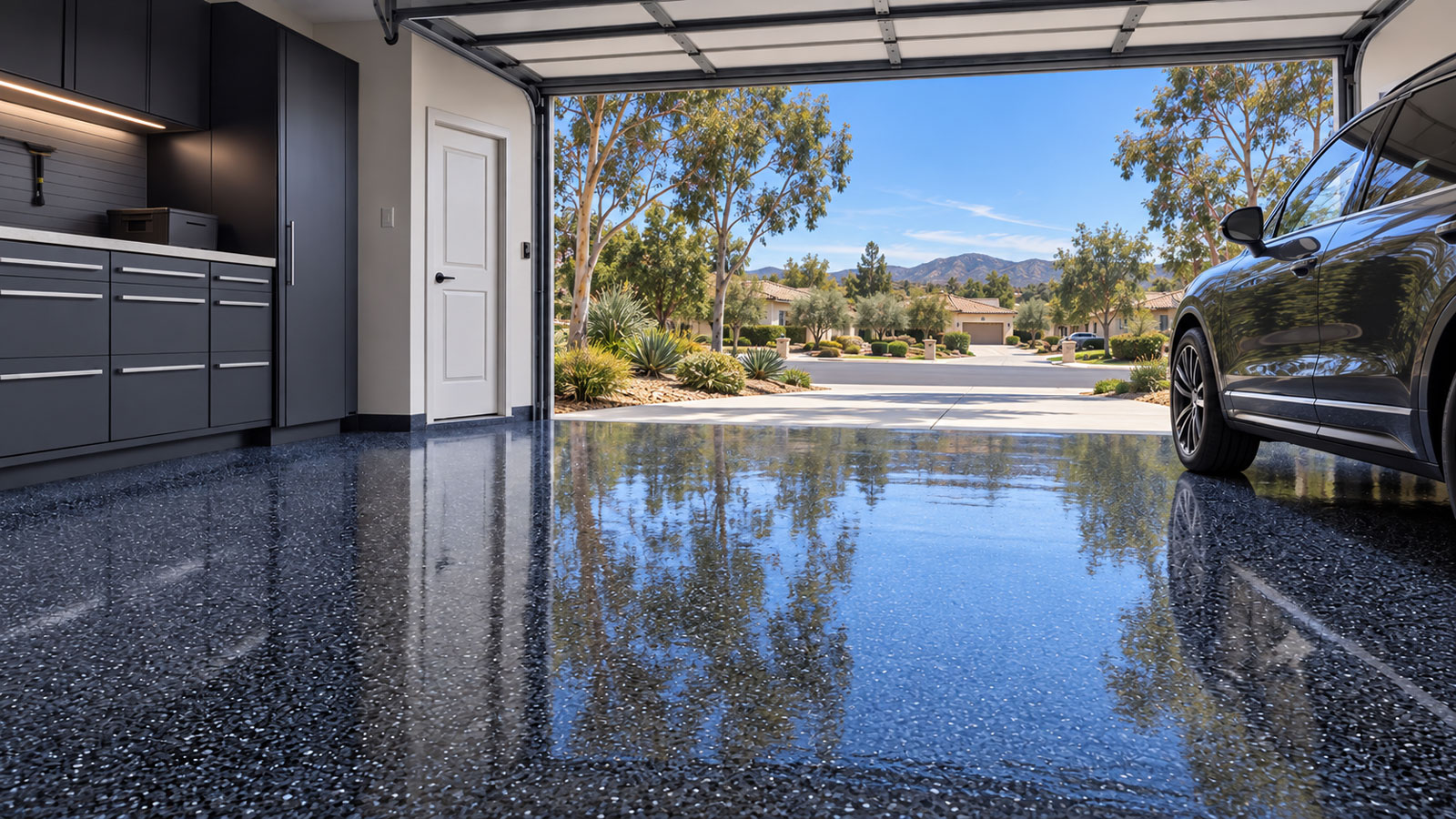
Garage Floor Coating in Mission Viejo, CA
Floor Coating Services in Mission Viejo, CA
Mission Viejo grew from rolling ranch land into a planned residential community beginning in the mid-1960s, and the city is now essentially built out. That means most coating projects start with an existing garage that has already seen years or decades of vehicle traffic, storage, repairs, and homeowner improvements.
Most owner-occupied homes in Mission Viejo were built before 2000, with especially large numbers from the 1960s through the 1990s. A mature garage floor may therefore have old paint, sealers, patch material, cabinet anchor holes, previous DIY coatings, or repairs from earlier remodeling.
The rolling terrain adds a second local consideration. Two homes built in the same decade can have very different driveway grades and water paths at the garage door. A good estimate should look at both the slab history and the threshold before the floor is coated. Mission Viejo's planned residential neighborhoods encompass different construction phases and garage arrangements. That built context is more useful when linked to actual floor dimensions, stepped transitions and previous finishes than when treated as a guarantee of uniform concrete.
Local Market Insight
Mission Viejo is a mature planned community with most homes built from the 1960s through the 1990s. Existing slab history, previous owner improvements, and the way a rolling-hill driveway meets the garage can all affect the project.
What Affects the Cost of Garage Floor Coating in Mission Viejo?
Mission Viejo's planned residential garages may look similar from the street while containing very different previous coatings, storage layouts and crack repairs. These distinctions change labor and staging. Ask the installer to explain the required profile, whether old paint is sound, how thresholds will be finished and whether the proposed texture fits use as a household entry. Old coating removal, crack and patch repair, garage size, threshold details, and the finish system are the main drivers of the final price.
Mature slab history
Many Mission Viejo garages have been in use for decades. Old paint, sealers, repairs, or previous coatings should be expected as possibilities and checked before preparation begins.
Crack and patch repair
Mature concrete can be sound while still carrying cracks, pits, or old repairs. Preparation should distinguish stable surface defects from areas that show movement or deterioration.
Driveway grade and threshold drainage
Mission Viejo’s rolling terrain shows up in many street and driveway grades. The direction water moves at the garage door should be checked before coating.
Storage and established garage use
Long-established homes often use the garage for storage, tools, bikes, refrigerators, hobbies, or household overflow in addition to vehicles. The estimate should identify what must move and what is fixed in place.
Previous resurfacing or remodeling
A garage in a 1970s home may have a newer slab section, patches, or resurfacing from later remodeling. Different pours and repairs should be identified rather than assuming the entire floor is the same age.
Finish and schedule
Flake coverage, traction, topcoat, and how quickly the garage must return to vehicle use affect the system and schedule after preparation needs are known.
Call for a clear, project-specific estimate — or request one online.
A Community Built Mostly From the 1960s Through the 1990s
Mission Viejo’s first homes went up in the mid-1960s, and the city filled out over the following decades. That gives many garages a more concentrated age range than cities that grew gradually over a century.
A mature floor may have several generations of homeowner improvements even when the slab itself remains sound: paint, cabinets, patching, coating kits, storage anchors, or repaired cracks can all change the preparation.
For the homeowner, the useful question is what has happened to the floor since construction — not simply how old the house is.
Mission Viejo garages are usually mature existing spaces rather than new-construction slabs. That history can show up as old floor paint, previous DIY coatings, patched cracks, oil lanes, anchor holes from cabinets, or concrete that was resurfaced during a remodel.
None of those conditions automatically makes the floor a poor coating candidate. They simply need to be found and handled during preparation so the new system relies on sound concrete instead of old weak material.
Some households use the garage as the principal entrance, making tracked water and desired traction important. Others prioritize storage or workshop use. Before color selection, compare surface profiling, crack preparation, texture samples and parking downtime against the specific household's use.
Mission Viejo's planned-community identity does not make every garage identical. Even within the same neighborhood, previous floor paint, cabinet installations and past concrete repairs can change the amount of preparation. Where a floor functions as the main entry to the house, texture and easy cleaning may be as important as color selection. Those needs should be established by talking with the homeowner and examining the floor, not guessed from an address.
Rolling Hills Put the Garage Threshold on the Checklist
Mission Viejo’s rolling terrain still shows up in streets and driveway grades. Two homes in the same neighborhood can have noticeably different slopes leading to the garage.
That can change how rainwater and debris reach the threshold. The coating does not need a special “hill” chemistry, but the edge detail and drainage situation should be understood before installation.
Once the water path is clear, the floor system can be specified around the concrete, the garage use, and the homeowner’s finish preferences.
The driveway deserves a separate look. If rainwater reaches the garage or collects at the threshold, that condition should be understood before the new finish hides the visual clues.
The city participates in Orange County's own floodplain-administration network through its engineering department. That administrative fact is useful for locating appropriate guidance if water is known to enter from outside; it is not evidence that a particular Mission Viejo garage experiences flooding. A floor finish should not be offered as a correction for grading or rainwater runoff.
Questions to Answer Before Coating a Mission Viejo Garage
- Was the floor ever painted, sealed, resurfaced, or coated?
- Are visible cracks or patches stable, or are any areas deteriorating?
- Does the driveway pitch toward the garage or away from it?
- Has the garage layout changed through cabinets, storage systems, or additions?
- Are multiple concrete pours or transitions visible?
- How soon does the garage need to return to vehicle use?
Mission Viejo Garage Floor Coating FAQs
Are Mission Viejo garage slabs generally old?
Many are mature because much of the city was built from the 1960s through the 1990s, but age alone does not determine condition. Previous finishes, repairs, cracks, and contamination matter more.
Why is Mission Viejo’s rolling terrain relevant?
It can change driveway grade and the way water reaches the garage threshold. That affects site planning and edge details, not the basic chemistry of the coating.
Can an old DIY coating be left in place?
Only if it is sound and compatible. Failed or unknown material is commonly removed so the new system bonds to properly prepared concrete.
Does a mature planned neighborhood mean every garage is the same?
No. Remodeling, slab replacement, storage use, slope, previous coatings, and repairs create meaningful property-to-property differences.
What if a Mission Viejo garage is used as the household entrance?
Discuss traction on wet days, how the finish will be cleaned and whether cabinets must be moved for grinding. Previous floor paint and repairs should be assessed before choosing decorative texture or parking-return timing.
Mission Viejo Neighborhoods & Local Context
Phone Quote Line
Speak with a floor coating specialist about your project and get a realistic estimate range.
(657) 500-0330Typical Project Cost
$3,000–$5,500
Typical range for a two-car garage. Final pricing depends on floor size, concrete condition, prep work, coating type, and finish options.
Helpful Guides