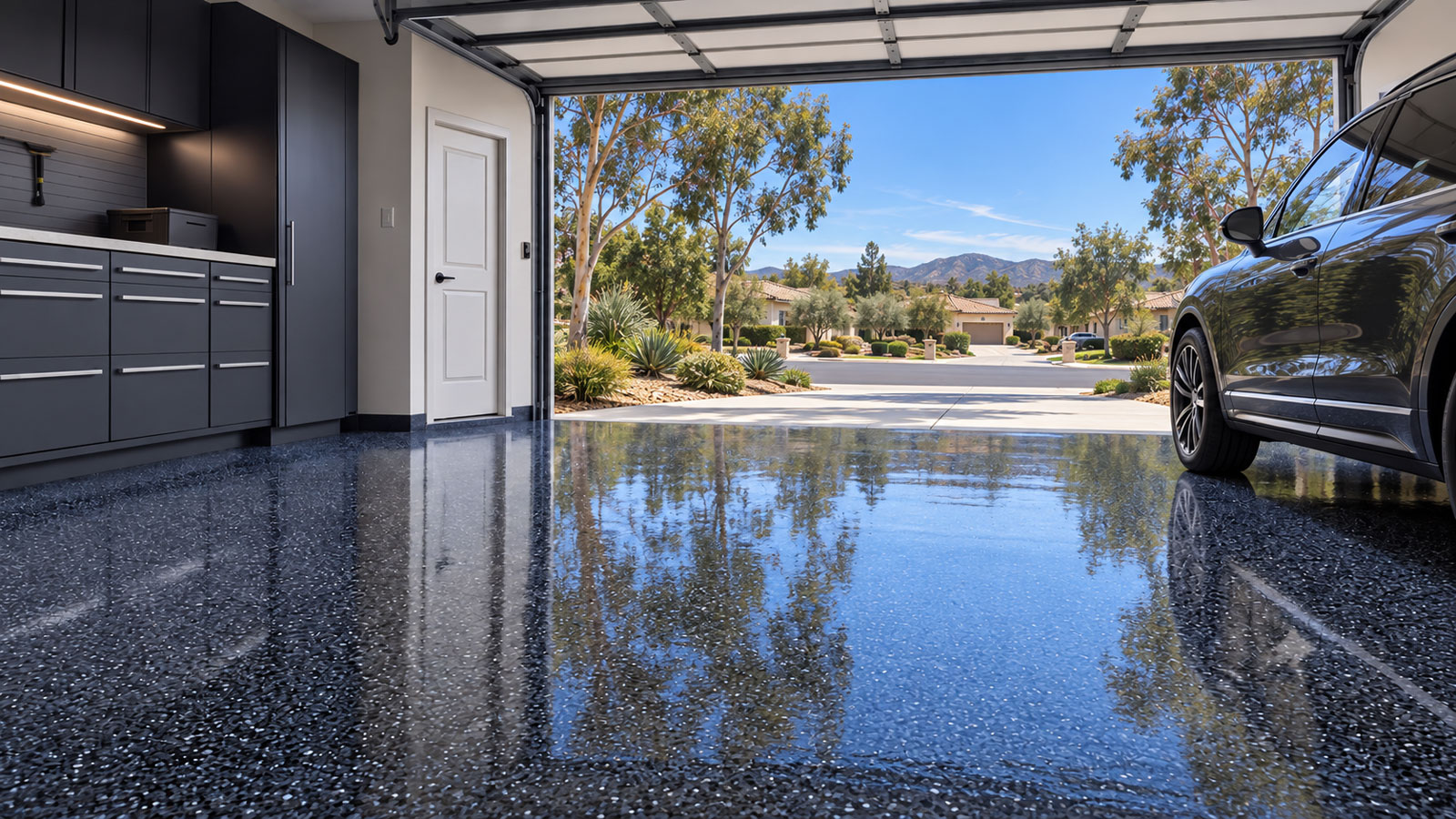
Garage Floor Coating in Irvine, CA
Floor Coating Services in Irvine, CA
Irvine’s local differentiator is development generation. The City’s planning background describes a master-planned community organized into villages, each with its own character and density. A recent City housing document says roughly 75 percent of Irvine housing was built after 1980, yet about 30 percent of occupied housing falls in the 1980–1999 period. That means “Irvine garage” can describe anything from an early village slab with decades of use to a much newer community floor.
That is a very different story from Orange or Anaheim. Irvine should not be written as an old-housing market, but neither should newer-looking concrete be assumed ready for coating. Builder-applied sealers, curing compounds, surface contaminants, cracks, and previous aftermarket coatings can all affect adhesion regardless of age.
The useful local question is therefore: which generation of Irvine neighborhood is this, and what has happened to the slab since construction? That directs preparation far better than a generic assumption that a master-planned city means uniform concrete.
Local Market Insight
Irvine’s village-by-village development history creates meaningful slab-age variation inside one city. The page should distinguish older village garages from post-1980 and newer-community slabs rather than treating Irvine as uniformly new.
What Affects the Cost of Garage Floor Coating in Irvine?
Irvine uses the $6–$12 per sq. ft. range, with $3,000–$5,500 typical for a two-car garage. Cost is driven by the actual slab treatment, repairs, and scope—not by Irvine’s home values.
Development generation and slab age
Irvine’s villages were built in phases. An early-village garage can have decades of use and repair, while a newer-community slab may be younger but still carry sealer, curing compound, or construction-era surface variation.
Sealer or curing-compound removal
A clean slab can still be a poor bonding surface if a curing compound or sealer is present. Mechanical profiling should verify the substrate rather than rely on appearance.
Previous aftermarket coating
Many garages are improved after construction. Failed paint, old epoxy, or spot coatings must be tested and removed where necessary.
Crack and joint preparation
Newer concrete can crack; older concrete can remain sound. Repair scope should follow the actual cracks, joints, patches, and movement.
Cabinetry and organized storage
Irvine’s page should treat cabinets, bikes, fitness equipment, and storage as questions to ask, not citywide assumptions. Fixed and movable items affect usable coating area and staging.
Sun and return-to-service
Large door openings can expose the floor edge to sun, while HOA/community parking constraints can make cure time practically important for some homeowners. The estimate should confirm those conditions rather than assume them.
Call for a clear, project-specific estimate — or request one online.
Local Garage-Floor Conditions in Irvine
Irvine’s housing profile makes a useful contrast: the city is relatively new, but “new” covers several decades. A 1980s or 1990s garage can still have 25–45 years of repairs and aftermarket finishes, while a recent slab may present a completely different preparation problem such as sealer or curing compound.
The village system also means local context is more useful when tied to development era than when tied to generic climate. The installer should ask when the home was built, whether the garage floor was ever coated or resurfaced, and whether fixed cabinetry or storage changes access to the concrete.
The coating system is then selected from the exposed slab. Irvine’s development history should help the homeowner ask better questions, not create a stereotype that every floor is pristine because the city is master-planned.
Older Villages and Newer Communities Are Different Starting Points
Irvine’s background reports describe a city built as a sequence of villages, with newer areas such as Stonegate, Woodbury, and Orchard Hills added after the earliest low-density villages. That phased history is the strongest local frame for a garage-floor page.
An older village floor may have old paint, oil, repaired cracks, or multiple owners’ improvements. A newer garage may have less wear but can still require aggressive profiling if a sealer or curing material interferes with adhesion.
Neither starting point is automatically cheaper. Preparation cost depends on what must be removed or repaired, not simply the age of the neighborhood.
Why “Looks New” Is Not a Surface-Prep Test
Irvine’s comparatively newer housing stock can create a false sense that a clean gray slab is ready to coat. Surface appearance does not prove that the concrete is open and bondable.
A floor may carry invisible or hard-to-see curing compounds, sealers, tire residue, or other contaminants. Mechanical preparation is what creates the surface profile needed for the coating system.
For homeowners, the practical question is not whether the floor looks good enough to coat. It is how the installer will verify that the new system is bonding to prepared concrete rather than to an unknown surface treatment.
Questions to Answer Before Coating an Irvine Garage
- What year or development phase is the home, and has the floor been resurfaced since then?
- Is the concrete truly bare, or is a sealer/curing compound/previous coating present?
- Which cracks, joints, or patches need repair before coating?
- Which cabinets or fixed storage will remain in place?
- How far does direct sun reach through the garage door?
- How long can the vehicles realistically stay out of the garage?
Irvine Garage Floor Coating FAQs
Are Irvine garages generally easier to coat because the city is newer?
Not necessarily. Irvine’s housing is newer than many neighboring cities, but a newer slab can still have sealers, curing compounds, cracks, or previous coatings. Preparation should be based on the surface, not the city’s average housing age.
Why does the Irvine village matter?
Different villages were developed in different periods. That changes the likely slab age and history, which can affect removal, repair, and preparation requirements.
Can fixed cabinets stay during installation?
Often they can, but the coating boundary and inaccessible concrete must be planned around them. Movable storage should generally be cleared so preparation can be continuous.
Do I need a special coating just because the garage gets afternoon sun?
The most UV-exposed area is usually near the open door. A finish appropriate for that exposure can be selected without assuming the entire interior needs an exterior-style specification.
Irvine Neighborhoods & Local Context
Phone Quote Line
Speak with a floor coating specialist about your project and get a realistic estimate range.
(657) 500-0330Typical Project Cost
$3,000–$5,500
Typical range for a two-car garage. Final pricing depends on floor size, concrete condition, prep work, coating type, and finish options.
Helpful Guides