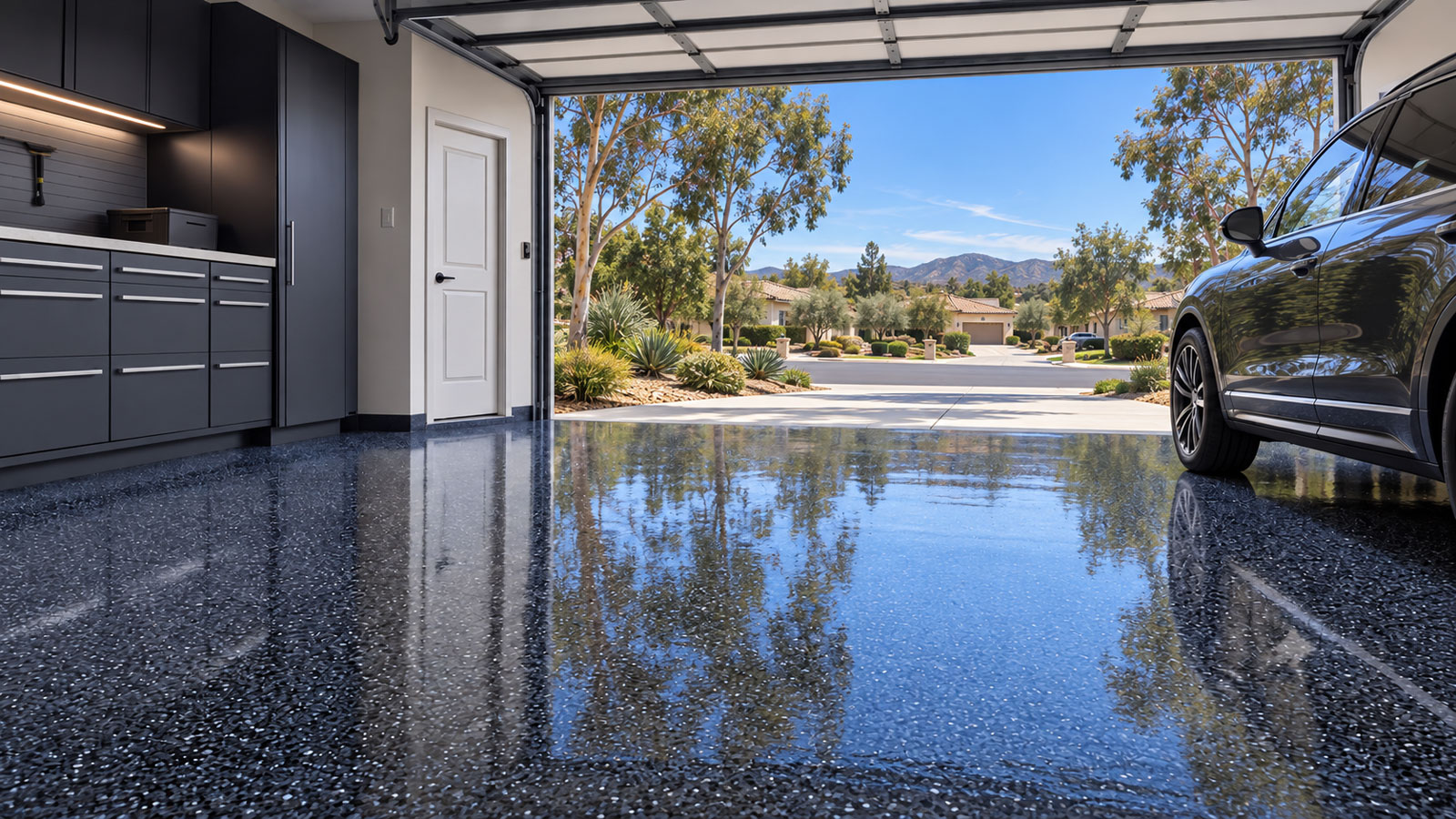
Garage Floor Coating in Orange, CA
Floor Coating Services in Orange, CA
Orange has one of the clearest housing-age stories in the territory. In the City’s cited Housing Element, 25.7 percent of housing was built in the 1960s and another 22.7 percent in the 1970s. For owner-occupied housing, 67 percent was built before 1980. That makes old paint, prior coatings, patch compounds, anchor holes, oil lanes, and previous repairs highly relevant preparation questions.
The city also includes much older housing: 5.9 percent of the housing stock was built in 1939 or earlier, much of it within the historic district, and 19 percent of owner-occupied units were built before 1960. A house date still does not tell you the slab date—garages can be added, rebuilt, expanded, or repoured—but it is a strong reason to ask about renovation history.
So the local Orange story is not simply “older homes.” It is layered slab history. The best coating project identifies what is original, what was added later, what has been painted or sealed, and which repairs are sound enough to remain.
Local Market Insight
Orange stands out for the age and layering of its housing stock: nearly half of the cited stock was built in the 1960s–1970s, while historic neighborhoods add much older homes. Preparation should be organized around slab history, not generic suburb copy.
What Affects the Cost of Garage Floor Coating in Orange?
Orange follows the $6–$12 per sq. ft. planning range and $3,000–$5,500 typical two-car range. The largest local cost swing is often what must be removed or repaired before coating begins.
Old paint, sealer, or coating removal
With so much established housing, a garage may have several generations of floor treatment. Weak paint, unknown sealer, or a failed coating can add substantial grinding/removal before a new system is applied.
Oil, adhesive, and contamination
Decades of parking, workshop use, storage, or remodeling can leave oil, adhesive, mastics, or chemical contamination. The floor must be prepared to a clean, reliable substrate.
Cracks, pits, and previous patches
Older concrete often carries repairs. The estimate should distinguish stable cosmetic repair from deteriorated or moving areas that need a different response.
Garage additions and changed layouts
In older neighborhoods, the garage may not be original to the house. Additions, conversions, extra steps, or later cabinetry can create different slab ages and transition details within one project.
Historic-home context versus later suburban tracts
Orange contains both prewar/historic housing and large 1960s–1970s cohorts. Those areas can present different slab histories even when the homeowner’s goals are identical.
Finish and schedule
Flake blend, texture, topcoat, and return-to-service timing affect price after the preparation scope is known.
Call for a clear, project-specific estimate — or request one online.
Local Garage-Floor Conditions in Orange
The most important local inspection in Orange is often forensic: what has been done to this floor before? A slab can look bare but still contain sealer, adhesive, patch compound, or residues from an older finish. Mechanical preparation is how the installer gets past appearance and down to a bondable surface.
House age and garage-slab age also need to be separated. A pre-1960 home can have a garage poured decades later, while a 1970s home may still have its original slab. The estimate should never treat the tax-record age of the house as proof of concrete condition.
That makes Orange a good market for explicit prep communication. The homeowner should be told which old materials will be removed, where repairs are needed, and what will remain visible or functional—especially control joints and transitions.
Orange’s 1960s–1970s Housing Wave
Almost half of the City’s cited housing stock was built in just two decades: the 1960s and 1970s. That is a useful garage-floor fact because concrete from that era may have been exposed to several decades of vehicles, storage, repairs, and changing homeowner tastes.
A floor might have been painted in the 1980s, patched in the 1990s, covered with a DIY coating later, and then partially ground or repaired again. The present surface can therefore be a stack of decisions rather than one simple slab.
The coating contractor’s job is to reduce that history back to a reliable substrate. That is why removal and prep can matter more than the decorative color selected at the end.
Historic Orange: Original House Does Not Mean Original Garage
The City’s Housing Element notes that nearly six percent of housing was built before 1939, much of it in the historic district. Those properties deserve especially careful separation of house history from garage history.
Garages may have been added, moved, enlarged, or repoured long after the main house was built. A homeowner should not assume the concrete is nearly a century old—or nearly new—without evidence.
Useful pre-coating questions include whether the garage footprint changed, whether different concrete pours are visible, and whether old coatings or patches mark previous remodeling.
Questions to Answer Before Coating an Orange Garage
- Is the garage slab original to the home, or was the garage added or remodeled later?
- Is any old paint, sealer, adhesive, or previous coating still present?
- Are cracks or patches concentrated at an addition, doorway, or transition between pours?
- Has the garage been used as a workshop or storage space that could have left oil or chemical contamination?
- Which joints should remain functional rather than be visually buried?
- What must be moved or removed before continuous grinding can begin?
Orange Garage Floor Coating FAQs
Can a garage in an older Orange home still be a good coating candidate?
Yes. Older concrete can perform very well if it is sound and properly prepared. The important variables are previous finishes, contamination, cracks, patches, and moisture—not the construction year alone.
Why does Orange need more attention to previous coatings?
The city has a large mature housing stock, so many garages have had decades in which paint, sealers, DIY kits, or repairs could have been added. Those layers can interfere with adhesion if they are not removed or evaluated.
Does living in the historic district change the coating chemistry?
No. Historic context matters because the garage and slab may have a complicated renovation history, not because historic homes require a special resin. The actual concrete still drives the system.
Will a flake floor hide old repairs?
It can visually blend repaired areas, but the repairs still need to be sound and properly prepared. A decorative finish should not be used to conceal unresolved slab movement or deterioration.
Orange Neighborhoods & Local Context
Phone Quote Line
Speak with a floor coating specialist about your project and get a realistic estimate range.
(657) 500-0330Typical Project Cost
$3,000–$5,500
Typical range for a two-car garage. Final pricing depends on floor size, concrete condition, prep work, coating type, and finish options.
Helpful Guides